– J.S. Ifthekhar
It was raining fit to drown not just a duck but perhaps an entire flock of them. I was in Aruna Colony, Tolichowki, visiting my daughter, carrying two freshly published books under my arm like a travelling salesman determined to increase his readership by two copies.
Since the residence of my good friend, Moiz sab, is only a stone’s throw away, I thought of presenting the books to him. But the rain was so persistent that I decided to abandon the idea. After all, books and rainwater have never enjoyed cordial relations.
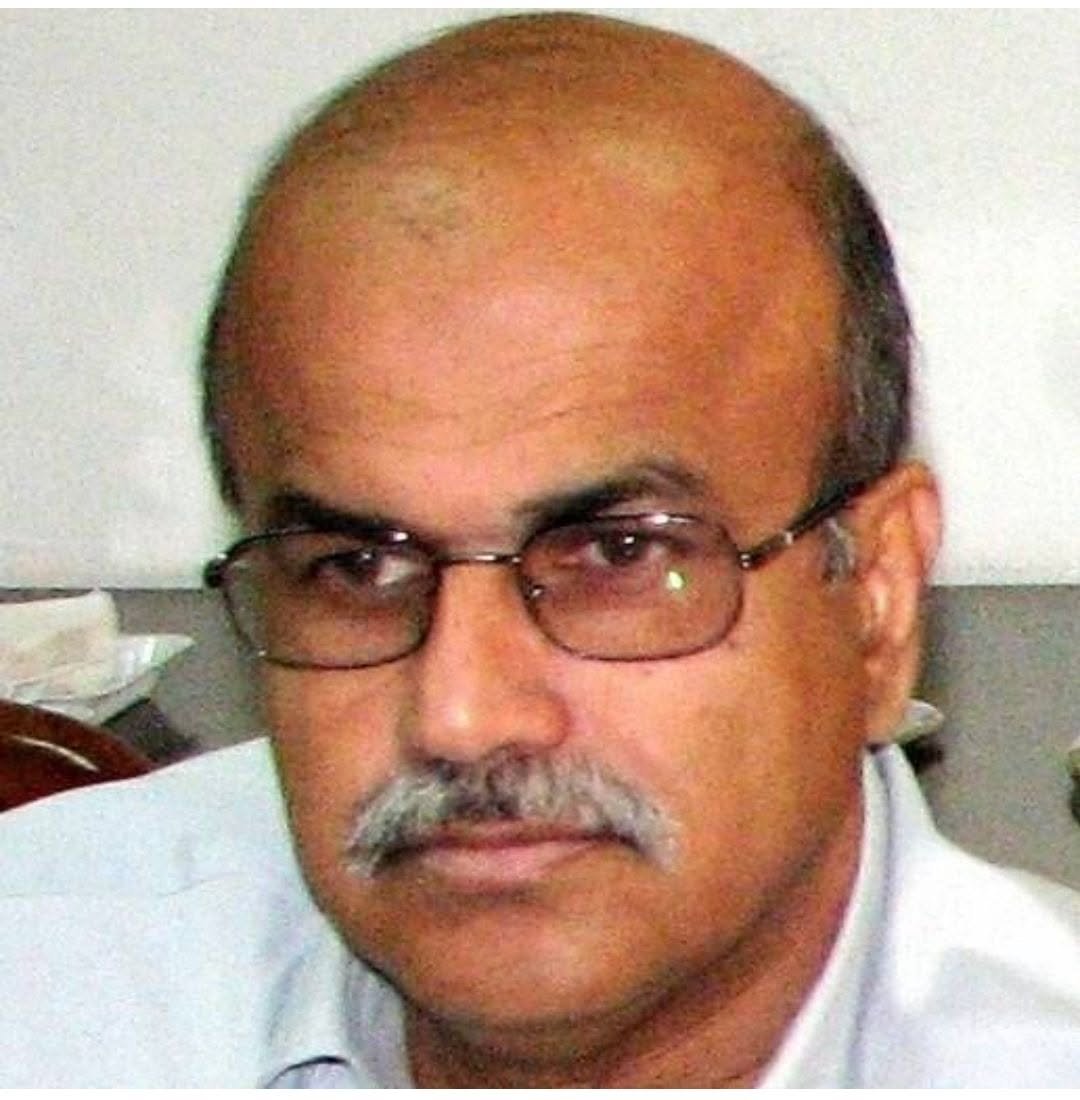
As if taking pity on me, the clouds suddenly dispersed and the rain stopped. Encouraged by this meteorological generosity, I headed towards Moiz sab’s house. Calling him “Dr. Abid Moiz” somehow feels inappropriate. The prefix “Dr.” sits uneasily on him. He may be a medical doctor by profession, but his true ailment is Urdu, and he suffers from it happily. For me, he is simply “Moiz sab.”
His famous Urdu Clinic, situated in a narrow and dimly lit lane in a corner of his house appears almost symbolic. The lane itself seems to narrate the present condition of Urdu — neglected, poorly lit, yet stubbornly alive. Inside, however, books line the shelves with remarkable order and elegance, displaying the ‘saleeqa’ (finesse) that Urdu imparts to its devotees.
“Will you have tea?” he asked courteously.
“No, I have just had one,” I replied, little realizing that I had walked straight into his territory.
آپ تو پیے ہوے نہیں لگتے
“Aap to piye huye nahin lagte,” he remarked gently. (You do not appear to be drunk).
The joke landed perfectly. The humourist in him never sleeps. Even his ordinary conversation comes wrapped in satire and wit.
“How are you doing?” I asked, undeterred.
“Jaise is umr mein hona chahiye,” he replied with characteristic nonchalance — as one should be at this age. It was another of his brief yet thought-provoking responses.
I then presented him with copies of my newly published books. In return, he gifted me two of his latest works, Shairi Zaria-e-Izzat Nahin and Istelahaat – Bojhiye aur Banaiye. With these additions, he now stands just one book short of completing half a century. An extraordinary achievement for a man whose primary profession is medicine.
For the next half hour we discussed books, Urdu, declining readership and the younger generation’s romance with mobile phones. While many mourn the death of reading, Moiz sab remains hopeful. He believes that one day the mobile-addicted generation will return to books, perhaps when their batteries finally die.
Sensing that further conversation might expose my own intellectual shortcomings, I took leave. As I stepped outside, a cold breeze and a light drizzle welcomed me. Riding back home, I carried with me not merely a burst of energy but a mind refreshed by the company of Moiz sab — one of those rare men who keep both humour and Urdu alive.