J. S. Ifthekhar
Hyderabad
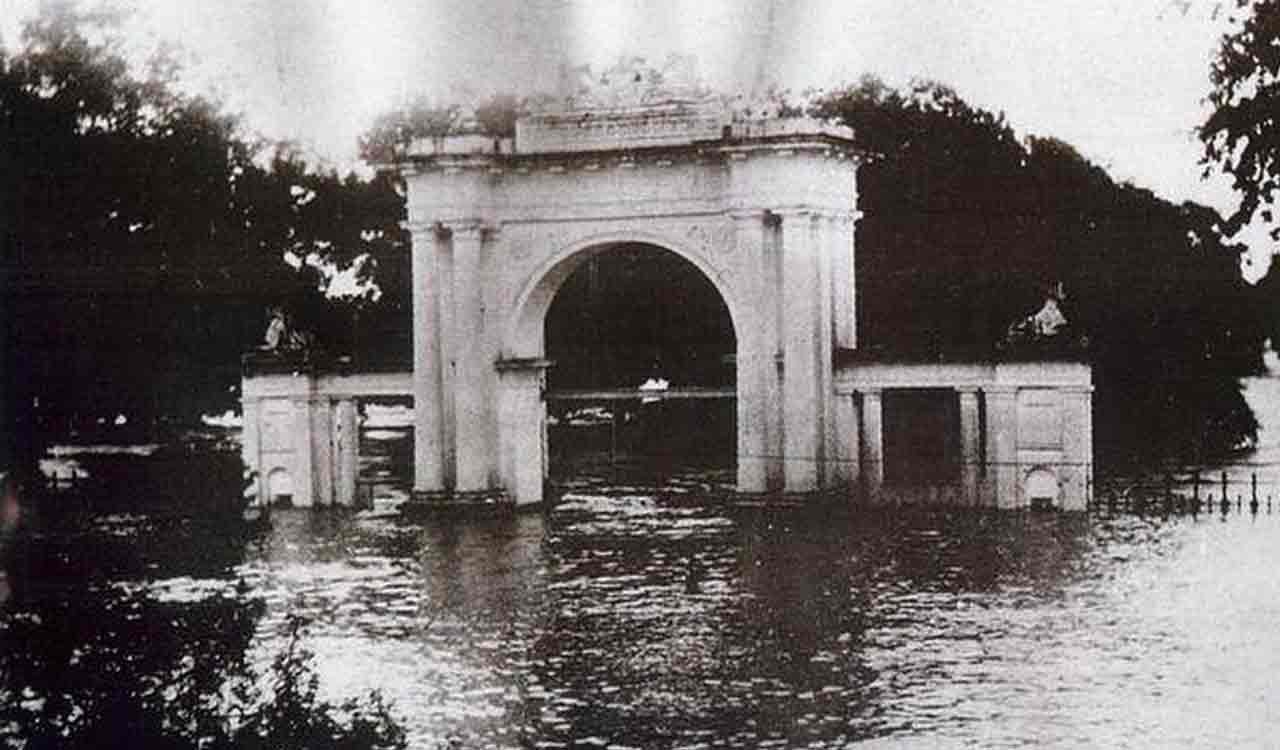
Some memories are too painful to bear, yet they remind us of resilience and survival. For Hyderabad, September 28, remains etched in collective memory as a day of devastation. The Musi flood of 1908 was not merely a natural disaster; it was a catastrophe that reshaped the city’s landscape, governance, and psyche.
A Night of Terror
That fateful night, torrential rains that had battered Hyderabad for days culminated in devastation. The Musi River, swollen beyond control, tore through homes, markets, and bridges. According to the renowned engineer, Mokshagundam Visvesvaraya, the flood was triggered by irrigation tanks bursting under relentless downpour. On September 26, the rains intensified. By the 28th, Purana Pul was submerged, the city’s ramparts breached, and in just three hours the Musi swelled 16 feet. Afzal Bridge, Muslim Jung Pul, and Chaderghat were swallowed whole.
By dawn, Hyderabad was unrecognizable. Broken houses, uprooted trees, carcasses, and corpses floating in the muddy waters marked the cityscape. Some 2,000 died in Kolsawadi, another 2,000 in Ghansi Bazar, and in total, nearly 50,000 lives were lost. Desperate families clung to walls, and in one remarkable instance, 150 people survived by holding onto a tamarind tree near today’s Osmania General Hospital. A plaque there still records their escape.
Pain Etched in Poetry
The deluge also left its mark on literature. Well known poet, Amjad Hyderabadi, who lost his mother, wife, and daughter, immortalized the tragedy in his Rubaiyat (quatrains). His famous poem, Qayamat-e-Soghra (The Minor Doomsday) captures the calamity:
Wo raat ka sannata, wo ghanghor ghatain
Barish ki lagatar jhadi, sard hawain
Girna wo makanon ka, wo cheekhon ki sadain
Wo mangna har ek ka ro-ro ke duain
(The sepulchral silence of night, the sinister clouds
The unrelenting rain, the freezing winds
The uprooting of houses, the screaming sounds
Praying with teary eyes, anguished minds)
Tragedy That Sparked Reform
Ironically, the floods paved the way for progress. Though the floods occurred when the 6th Nizam, Mir Mahboob Ali Khan was the ruler, his successor, the 7th Nizam, Mir Osman Ali Khan, recognized the urgent need for planned development. In 1914 he set up the City Improvement Board (CIB), or Aaraish-e-Balda, which launched major works. The construction of Osman Sagar and Himayat Sagar reservoirs not only regulated floods but also secured Hyderabad’s drinking water. Out of ruins emerged the foundations of modern Hyderabad.
Lessons Still Unlearnt
Every year, citizens gather at the tamarind tree to honor those who perished. Yet Hyderabad remains vulnerable. Heavy rains in 1994, 2000, 2009, 2016, 2020 and this September too exposed the city’s frailties – encroached drains, poor planning, and civic neglect. After the 2000 floods, the Kirloskar Committee flagged 13,500 illegal structures blocking 390 km of drains. Today that figure has doubled to nearly 30,000. Each monsoon brings inundation, traffic chaos, and loss, while official inquiries yield little beyond paperwork.
Natural or Manmade?
The Musi flood of 1908 was an act of nature, but the disasters of today are largely manmade, born of encroachment and apathy. History shows that tragedy can inspire reform, but only if lessons are remembered. Unless firm measures are taken, the lessons of 1908 may fade, and the city risks repeating the same mistakes.
eom