By: Syed Zia ur Rahman, YaHind.Com
Hyderabad: A Global Roundtable of senior Aligs and alumni of Aligarh Muslim University (AMU) was held in Hyderabad to discuss the university’s academic, administrative and institutional affairs and explore measures for its future development.
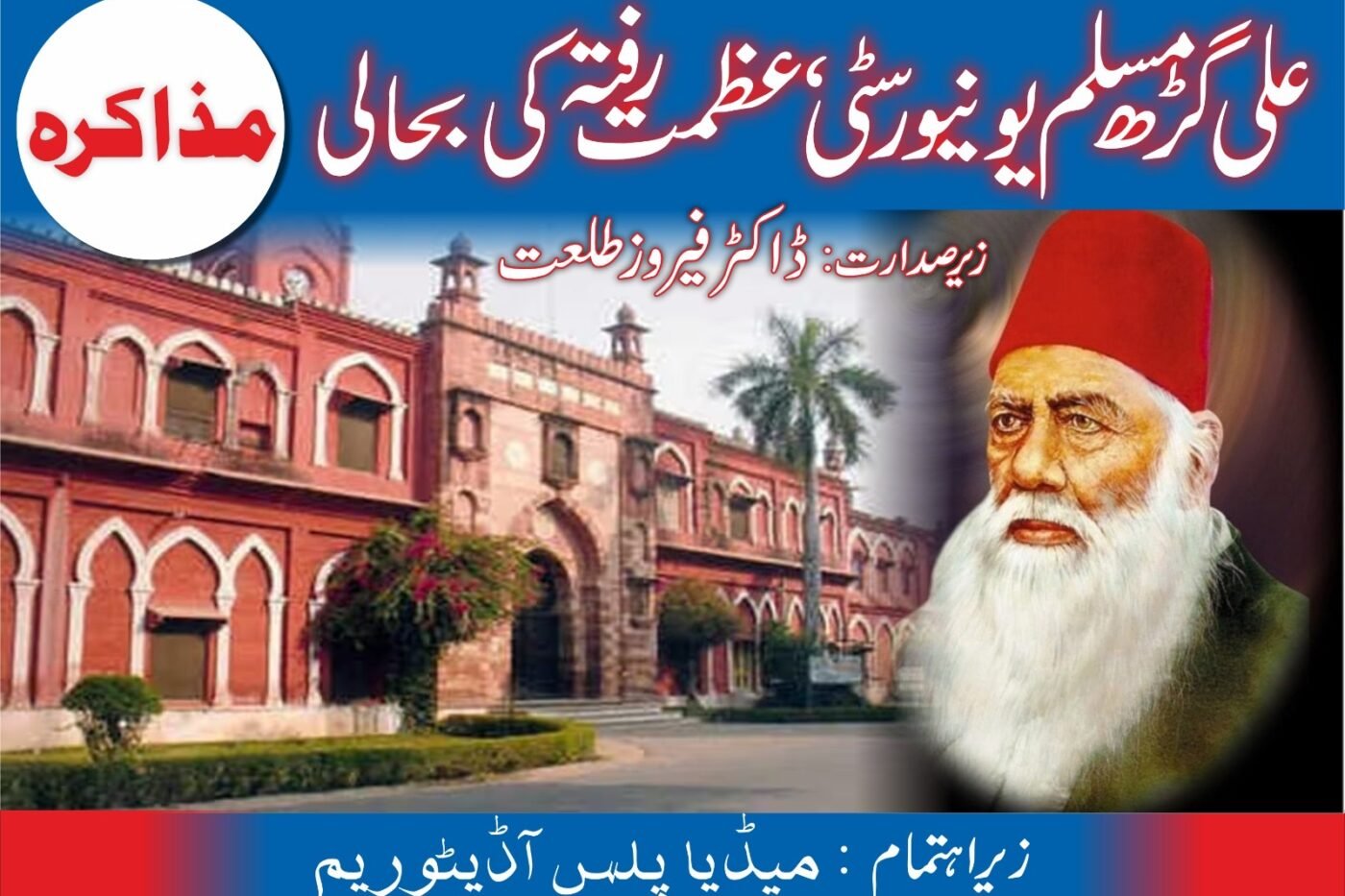
The hybrid meeting, hosted by the Media Plus Foundation at Media Plus, Hyderabad, on September 21, was convened by Dr Mohammed Sajid Ali and chaired by senior Alig Dr Firoz Talat (Afroz Talat) of Azamgarh. Dr Syed Fazil Hussain Pervez, Editor of Gawah Weekly Urdu, moderated the proceedings. Syed Zia ur Rahman, Editor of YaHind.Com, and Prof. Masood also attended the programme.
Prof. Mohammed Luqman, Dr Rahat Abrar, Zakir Khan Faizan, Tahir Mohammed and several other senior Aligs and alumni from India and abroad, including non-Aligs K. N. Wasif and Mohammed Muzaffar Ahmed, participated in the roundtable.
Dr Mohammed Sajid Ali welcomed the participants, highlighted the aims and objectives of the global meeting, and in his concluding remarks proposed preparing and circulating a detailed resolution based on the suggestions put forward during the discussions.
Dr Firoz Talat underlined that organisational irregularities were a major cause of the university’s decline. He pointed to the prolonged absence of the Students’ Union, nepotism, corruption and lack of sense of responsibility among those in authority. He observed that Sir Syed’s mission had been sidelined in favour of personal interests and that many old students familiar with the university’s problems were showing disinterest or indifference. He suggested that the revival of the long-inactive “Qadeem Action Group” of former students could help address the issues.
Prof. Mohammed Luqman stressed the urgent need for regular faculty, describing guest faculty as a mere drama that was destroying the academic system. He lamented the erosion of AMU’s traditional culture and identity, noting the excessive presence of two-wheelers as one factor. He highlighted that despite a population of 25 crore, the community has fewer than five universities of its own. The absence of the Students’ Union, he said, was further aggravating the situation, while lack of interest among faculty members and corruption across departments were lowering academic standards.
Dr Rahat Abrar observed that the activities of old boys worldwide were largely limited to annual events and that they showed insufficient interest in Sir Syed’s mission. He pointed out that the university’s boundary wall had collapsed at several places, emboldening illegal occupants. He emphasised that the primary responsibility of old students was to keep Sir Syed’s mission alive and noted that several associations founded by Sir Syed for this purpose had become defunct. He called for the formation of a global organisation of Aligs as essential to tackle the university’s problems, restoration of democratic values, and greater attachment among teaching and non-teaching staff. He suggested forming a pressure group of prominent old students to engage the administration and government, adding that AMU had generally fared better when under IAS officers and that every step should serve the community’s interest.
Zakir Khan Faizan said protection of university land from encroachment must be the top priority for Aligs. He recommended that future Zoom meetings should have a prepared agenda prioritising issues according to their seriousness. He demanded the urgent restoration of Students’ Union elections, stalled for eight years, arguing that an active union might have prevented illegal occupation of university land. He urged old students to continuously represent their concerns to the authorities, either personally or through mail, to awaken those responsible.
Tahir Mohammed from Bombay noted that greater involvement of local Aligarh old boys would prove more effective. He observed that the low attendance at the global meeting itself reflected the seriousness (or lack of it) with which the community was treating AMU’s grave problems, and that mere diagnosis of the disease without prescribing treatment or remedies was insufficient.
K. N. Wasif, a non-Alig participant, remarked that annual Alig celebrations across the world had acquired the character of an Urs. He stressed that AMU Old Boys Associations needed to sit together seriously, deliberate on the deteriorating condition of their alma mater, offer concrete suggestions and continuously engage with university authorities to demonstrate genuine commitment. He strongly supported the proposal for an urgent pressure group and advised that future meetings should avoid emotional speeches and mutual criticism, focusing instead on unity, open-mindedness and community interest.
Mohammed Muzaffar Ahmed (non-Alig) suggested that Dr Firoz Talat compile a comprehensive list of Old Boys Associations in India and abroad and bring them into this global group.
The participants adopted a resolution seeking a transparent review of AMU’s administration, academic standards, research, student welfare and governance. They urged the competent authorities to take appropriate steps, in accordance with the university’s statutes and applicable law, towards restoration of the elected Students’ Union and greater student representation. The meeting called for strengthening the regular faculty, improving academic and research standards, protecting university land and property, identifying alleged encroachments and ensuring stronger boundary security.
The resolution emphasised preserving the Aligarh ethos and advancing the educational mission associated with Sir Syed Ahmad Khan. It proposed strengthening alumni networks, reviving inactive organisations and creating a global platform to connect AMU alumni associations in India and abroad. Participants stressed that concerns regarding the university should be addressed through evidence, transparency, dialogue, accountability and due process, with the focus on institutional strengthening.
The roundtable appealed to the global Aligarh alumni community to engage constructively and work collectively towards academic excellence, institutional autonomy, transparency and the long-term development of AMU.
Source: K. N. Wasif