
By YaHind.Com News Desk
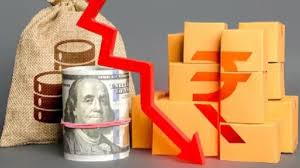
YaHind.Com | New Delhi | December 4, 2025: In a shocking blow to India’s economic resilience, the Indian Rupee has plummeted past the dreaded ₹90 per US Dollar mark for the first time in history, marking it as Asia’s most underperforming currency this year. As of December 3, 2025, the exchange rate surged to a record high of ₹90.295 against the Dollar, reflecting a 0.26% daily depreciation and a staggering 5.3% year-to-date (YTD) decline – the sharpest annual drop since 2022.
This free-fall comes amid relentless foreign investor outflows, stalled global trade deals, and a strengthening US Dollar fueled by Federal Reserve policies. Bloomberg has unflinchingly labeled the Rupee as “Asia’s worst-performing currency of 2025,” outpacing even volatile peers like the Indonesian Rupiah and Philippine Peso. Analysts warn that without swift intervention, the Rupee could slide further towards ₹92-95 in the coming months, exacerbating import costs and testing the mettle of every Indian household.
What began as a gradual erosion earlier in the year has accelerated into a full-blown crisis. The Rupee’s average rate for 2025 stands at ₹86.91, but recent weeks have seen it nosedive from ₹89.16 in late November to yesterday’s abyss. Key culprits include persistent capital flight, with Foreign Portfolio Investors (FPIs) yanking out over $15 billion from Indian equities and debt markets YTD, spooked by geopolitical tensions and a cooling US-India trade pact. Energy import woes have compounded the pressure, with crude oil prices hovering above $80 per barrel, ballooning India’s $200 billion annual oil bill and draining forex reserves. The US Dollar’s dominance, driven by higher US interest rates, has crushed emerging market currencies, with the Rupee bearing the brunt in Asia.
Says Dr. Anjali Sharma, Chief Economist at the Indian Institute of Economic Affairs: “This isn’t just a currency dip; it’s a wake-up call for self-reliance. We’ve built a $3.7 trillion economy on strong domestic foundations, but external shocks like these remind us why Atmanirbhar Bharat must accelerate.”
For the aam aadmi, the Rupee’s tumble translates to real pain at the wallet. Petrol prices in Delhi could spike another ₹5-7 per litre within weeks, while imported essentials like electronics, gold, and even smartphone components will cost 10-15% more. Inflation, already ticking at 5.8%, risks crossing 7% if the slide persists, hitting middle-class budgets hardest.
On the flip side, exporters – from IT giants like TCS to textile hubs in Tirupur – stand to gain, with a weaker Rupee boosting competitiveness. “A 5% depreciation could add ₹50,000 crore to export revenues,” notes Sakshi Gupta, Forex Head at HDFC Bank, urging policymakers to let market forces play out without panic interventions.
The Reserve Bank of India (RBI) has already spent $10 billion from its $650 billion forex war chest this year to stem the bleed, but Governor Shaktikanta Das hinted at “calibrated measures” in yesterday’s statement. Critics argue excessive defense only delays the inevitable, while proponents of a floating Rupee see long-term benefits in discipline.
As one Twitter user quipped amid the frenzy: “Rupee at 90? Time to export more chai and import less iPhones! #BharatRising.”
In the spirit of YaHind, this crisis is not defeat but a clarion call. India’s GDP growth forecast remains robust at 6.8% for FY26, outpacing global peers, thanks to domestic consumption and manufacturing push under Make in India 2.0. Prime Minister Modi’s vision of Viksit Bharat by 2047 demands we weather this storm – diversify trade partners, ramp up rupee-based settlements with BRICS allies, and fuel innovation in green energy to slash import dependence.
The Rupee may wobble today, but Bharat’s spirit endures. Stay tuned to YaHind.Com for live updates, expert analyses, and strategies to safeguard your savings in these turbulent times.
Disclaimer: Currency markets are volatile; consult financial advisors for investment decisions. YaHind.Com does not provide financial advice.
Sources: Agencies
About The Author





Rupee crashing past 90 is the final proof that this government’s “strong economy” slogan was nothing but jumlas. Imports costlier, inflation rising, middle class struggling, yet they keep selling dreams on TV. Total economic mismanagement. 📉