JEDDAH : As the political climate in Kerala gathers renewed momentum in the run-up to the forthcoming Kerala Legislative Assembly Elections, the state’s vibrant and often fiercely contested electoral discourse continues to stir passionate debate among observers and voters alike. Echoes of that democratic energy were felt far beyond the shores of the state when FIT organized a compelling political dialogue in Jeddah—an event that drew keen interest from the diaspora community.
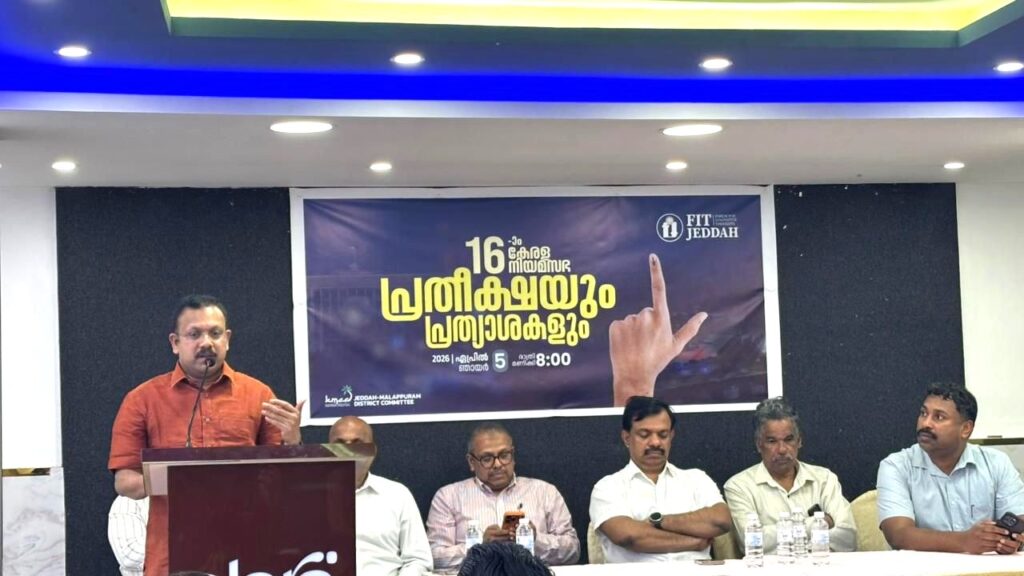
Bringing together prominent leaders from a spectrum of political and socio-cultural organizations, the gathering evolved into a lively forum for thoughtful reflection and meaningful exchange. Held under the evocative theme “The Sixteenth Kerala Legislative Assembly: Expectations and Aspirations,” the dialogue invited participants to reflect upon the evolving political landscape of the state with both critical insight and a spirit of hopeful anticipation.
Firmly anchored in this theme, the deliberations unfolded as a reflective appraisal of Kerala’s political journey over the past decade. Much of the discussion centered on evaluating the governance and administrative record of the government led by Pinarayi Vijayan, with panellist’s and participants candidly examining its achievements, policy directions, and the challenges that have shaped the state’s contemporary political narrative.
The interactive format of the program enabled attendees to raise direct questions to the panellist’s, transforming the session into a vibrant exchange of ideas rather than a routine address. Marked by civility and intellectual candour, the discussion mirrored the spirited yet thoughtful electoral discourse currently resonating across Kerala.
The event was inaugurated by C. K. Razak Master, whose remarks set a reflective and engaging tone for the evening, while Ishaq Poondoli delivered the keynote introduction, outlining the significance and broader context of the theme.
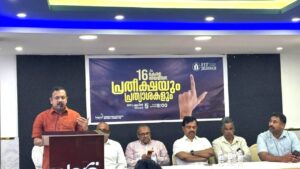
The panel discussion was enriched by the participation of representatives from several well-known expatriate and socio-political associations. The speakers included Hakkim Parakkal, representing the Overseas Indian Cultural Congress (OICC); Dr. Shibu Thiruvananthapuram from the Navodaya Cultural Association; Basheer Chulliyan, representing Pravasi Welfare; and Kabir Kondotty from Pauravali. Each speaker brought forward perspectives perspicaciously shaped by the experiences and concerns of their respective organizations, enriching the discourse with diverse viewpoints.
The session was ably moderated by Abu Kattuppara, whose careful stewardship ensured a balanced and engaging exchange of ideas. The concluding remarks were delivered by Noufal Ulladan, who succinctly captured the key reflections that emerged from the dialogue.
The program began with a warm welcome address by Jafar Venniyoor, setting a cordial tone for the gathering, while Naser Mamburam proposed the vote of thanks, expressing appreciation to the speakers, organizers, and participants who made the event meaningful and successful. The proceedings were carefully coordinated under the leadership of Afsal Naranath, Mustafa Master, and Jamsheer K. V., whose dedication ensured the smooth conduct of the program.
More than a mere political conversation, the gathering stood as a moving reflection of the enduring political awareness and civic engagement of the Kerala diaspora. Despite the geographical distance from their homeland, the participants demonstrated a deep emotional and democratic connection with the affairs of Kerala. Above all, the event illuminated a remarkable sense of unity among Keralite associations in the diaspora—transcending ideological differences and organizational boundaries. In doing so, it affirmed that dialogue grounded in mutual respect and shared civic responsibility can bring diverse voices together in the collective pursuit of informed and constructive public discourse.
M. Siraj
About The Author